Executive summary
Personalized HCP journeys work when relevance is built into the experience, not added on top of it later.
In HCP portals, that usually depends on five things:
- Content quality: information should be clear, credible, and genuinely useful to the HCP
- Content currency: content should be updated often enough to remain trustworthy and aligned with current needs
- Personalization: experiences should reflect specialty, role, intent, and stage of engagement
- Educational value: portals should support learning, not just content delivery
- Media formats: the same message can perform very differently depending on how it is presented
When these elements are missing, personalization tends to stay superficial. A portal may have smart targeting or strong orchestration, but if the underlying content is generic, outdated, or difficult to use, the journey will still feel impersonal.
This is why personalized HCP journeys are not only a campaign or channel challenge. They are also a content structure, UX, and a portal strategy challenge.
In this article, we explore:
- What personalized HCP journeys mean in pharma
- Why many HCP journeys still fall short
- How content structure and relevance support better engagement
- Why educational content and media formats matter
- How HCP portals can make personalization more useful and trustworthy
What are personalized HCP journeys?
Personalized HCP journeys are experiences designed around what different healthcare professionals need, when they need it, and how they prefer to engage.
In pharma, that means moving beyond a fixed sequence of touchpoints and creating journeys that adapt to real context. An HCP may look for a high-level overview at one stage, detailed clinical evidence at another, and a practical tool or educational resource later on. A personalized journey should be able to support those shifts naturally.
In HCP portals, personalization is not just about showing different users different content. It’s about making the experience more relevant at every step. That can include:
- Surfacing content based on specialty, role, or interests
- Recommending resources based on previous behavior or current intent
- Adapting next steps to where the HCP is in their journey
- Offering educational materials in formats that suit different use cases
- Making it easier to find the most relevant content quickly
This is what separates a personalized HCP journey from a standard content path. The goal is to reduce friction, improve relevance, and make each interaction feel more useful.
When done well, personalized HCP journeys help HCP portals feel less like static libraries and more like environments that support ongoing learning, discovery and engagement.
Personalized HCP journeys vs. omnichannel engagement
Personalized HCP journey and omnichannel engagement are closely related, but they are not the same thing.
Omnichannel engagement focuses on coordination across touchpoints. Its goal is to create a more connected experience across channels such as emails, portals, webinars, rep interactions, and other digital or in-person moments.
Personalized HCP journeys go a step further. They focus on how that experience adapts to the individual HCP: their role, specialty, interests, behavior, intent, and stage of engagement.
In simple terms, omnichannel is about connecting channels. Personalized journeys are about making the experience more relevant within and across those channels.
The difference in practice
| Omnichannel engagement | Personalized HCP journeys |
| Connects multiple channels and touchpoints | Adapts the experience to HCP needs and context |
| Focuses on consistency across interactions | Focuses on relevance across interactions |
| Helps teams coordinate messaging | Helps HCPs find more useful next steps |
| Often centers on channel orchestration | Depends on content, UX, structure, and timing |
| Can exist without deep personalization | Requires personalization to feel meaningful |
This distinction matters because a pharma company can have a strong omnichannel setup without delivering a truly personalized journey.
For example, an HCP may receive a coordinated email, visit a portal, and later attend a webinar. That may be an omnichannel strategy. But if the content across those interactions feels generic, repetitive, or disconnected from the HCP’s actual interests, the journey still won’t feel personal.
A personalized HCP journey is more than a connected series of touchpoints. It is an experience where each step feels more relevant than the last.
That usually depends not only on orchestration, but also on the quality of the content, the logic behind recommendations, and the way the portal helps the user move forward.
Why personalized HCP journeys matter now
Personalized HCP journeys matter because the expectations are higher, while pharma teams are under more pressure to make digital engagement more effective.
A portal or campaign is no longer enough on its own. The experience has to help HCPs find relevant information quickly and use it with minimal friction. Recent industry reporting also suggests that the challenge is not simply producing content, but making that content useful enough to help in practice.
That matters because many digital experiences still struggle with a basic gap between content availability and content value. Veeva’s 2025 Pulse reporting found that field teams use content in fewer than half of HCP meetings, while a large share of approved content is rarely or never used. That points to a relevance problem, not just a volume problem.
Kara Hansen, director of product management, content, and digital asset management at Genentech“Just because you can create more content doesn’t always mean you should. Your content strategy should be in service of your business goals. While personalized content can help achieve those goals, greater content volume is a side effect, not the goal.”
In HCP portals, this raises the bar. If content is hard to find, too broad, or not clearly up to date, the journey quickly loses value.
That is why HCP content personalization matters now. The question is no longer whether it should happen, but what makes it useful. In most cases, that comes down to quality, relevance, and how easily HCPs can act on it.

Why many HCP journeys still fall short
Many HCP journeys fall short because personalization is often treated as a delivery layer rather than a content problem.
In practice, pharma teams may invest in orchestration, segmentation, and multiple touchpoints, but still rely on content that is too broad, too static, or too difficult to navigate. When that happens, the journey may look personalized on paper, while feeling generic in use.
A few issues tend to appear again and again:
- Content is not specific enough — resources may be approved and available, but still too general to feel useful in a particular moment.
- Content is difficult to discover — even strong materials lose value when HCPs have to search too hard for them.
- Content is outdated or unevenly maintained — trust drops quickly when users are not sure whether information is still current.
- Personalization is too shallow — changing recommendations or next steps means little if the underlying content does not match real needs.
- Formats do not match content: a long PDF is not always useful when an HCP needs a quick answer, just as a short overview is not enough when deeper evidence is needed.
This is why many journeys lose momentum. The issue is often not the idea of personalization itself, but the experience underneath it. If the content does not feel relevant, current, and easy to use, the journey becomes harder to continue.
That is also why stronger HCP journeys depend on more than a better marketing strategy. They depend on a better content foundation.
The role of content in making personalized HCP journeys work
Content is what makes personalization feel real.
A journey can include smart orchestration, connected channels, and well-timed touchpoints. But if the content behind those interactions is too generic, outdated, or difficult to use, the experience will still feel impersonal.
That is why a personalized HCP portal content strategy matters more than delivery logic. The journeys depend on whether the content itself supports relevance at each step.
Relevant content for HCPs plays several roles at once:
- It helps HCPs find the information they need
- It shapes whether the experience feels useful or frustrating
- It builds trust in the portal as a source of value
- It determines whether the next interaction feels worth taking
This is where content structure and relevance become central. Strong journeys are usually built on content that is:
- High-quality, so it feels credible and worth engaging with
- Current, so HCPs can trust that it reflects the latest information
- Personalized, so different users see content that matches their needs and context
- Educational, so the experience supports learning, not just content delivery
- Well-formatted, so the same information is easier to use in different situations
When these elements work together, personalization becomes more than a recommendation engine or a segmented content path. It becomes part of the overall experience.
Content is what gives the journey its relevance.
Content quality: why better content drives better engagement
Content quality shapes whether an HCP journey feels worth continuing.
Even the best-designed portal can’t compensate for bad content. If it doesn’t help the HCP understand content faster, learn something useful, or act with more confidence, personalization has very little to build on.
In HCP portals, high-quality content usually shares a few characteristics:
- It is clear: the main point is easy to understand without unnecessary friction
- It is credible: the content feels trustworthy, evidence-based, and professionally relevant
- It is useful: it helps the HCP answer a real question or complete a real task
- It is well-structured: users can scan it quickly and go deeper when needed
- It respects time: it gets to the point without oversimplifying the topic
This matters because better engagement often starts with better content. An HCP is more likely to continue a journey when the first interaction already feels worthwhile.
In practice, content quality affects more than readability. It influences whether a portal feels helpful, whether users return, and whether recommendations feel relevant instead of random.
The stronger the content foundation, the easier it becomes for personalization to add real value.
Content currency: keeping HCP portal content accurate, timely, and trustworthy
Content currency plays a direct role in building trust.
Even strong content can lose value when users are unsure whether it is still current. A resource can be well written and clinically relevant, but if it is outdated, confidence drops quickly. That affects not only the individual asset, but the credibility of the portal around it.
Recommendations only feel useful when the content behind them still reflects the latest approved information, evidence, or educational priorities. Otherwise, personalization can start to feel unreliable instead of helpful.
Current content usually has a few visible qualities:
- It reflects the latest approved information
- It is reviewed and updated regularly
- It shows signs of maintenance, not neglect
- It aligns with the user’s current needs and context
- It remains consistent across related resources
Portals need a content model that makes updates easier, reduces duplication, and helps teams maintain consistency across formats and touchpoints.
When content stays current, the journey feels more trustworthy. When it doesn’t, even a well-designed portal can start to feel static.
Personalization: matching content to HCP needs, context, and intent
Personalization works when it helps content feel more relevant, not just more targeted.
This means going beyond simple segmentation. Different HCPs may need different levels of detail, different types of resources, and different next steps according to their specialty, role, familiarity with the topic, and reason for visiting.
A more meaningful approach to personalization can include:
- Specialty-based relevance: surfacing content that reflects the HCP’s clinical focus
- Behavior-based recommendations: adapting suggested resources based on what the user has explored before
- Intent-based journeys: recognizing whether the HCP is looking for a quick answer, deeper evidence, or an educational resources
- Stage-based support: offering different content depending on where the user is in the journey
- Format-based choice: giving access to the same topic in formats that suit different moments of engagement
This matters because relevance is contextual. The same content can feel highly useful in one situation and far less useful in another.
That is why personalization should not be treated as a thin recommendation layer. It works best when the content itself is structured in a way that makes different paths possible. The stronger the content model, the easier it becomes to match resources to real needs.
When done well, personalization reduces friction, improves discovery, and helps each next interaction feel more useful than the last.
Educational resources: supporting learning, not just promotion
Educational resources give personalized HCP journeys more lasting value.
HCPs do not engage with portals only to receive brand messages. They also look for content that helps them understand, compare, apply, or revisit information in a practical way. That is why educational value is such an important part of relevance.
In HCP portals, educational resources can take many forms:
- Clinical explainers that make complex topics easier to grasp
- Guideline summaries that support fast review
- E-learning modules for deeper knowledge-building
- Case-based content that adds practical context
- Interactive tools that turn information into something more usable
These resources matter because they support different levels of engagement. Some HCPs may want a quick refresher, while others may be ready for more in-depth learning. A strong journey should be able to support both without forcing every user through the same content path.
Educational content also helps shift the portal experience from passive consumption to active value. Instead of simply presenting information, the portal becomes a place where HCPs can learn, explore, and return for something useful.
That makes educational resources an important part of personalization. They create more meaningful ways to match content to intent, context, and stage of engagement.
Media formats: choosing the right format for the right moment
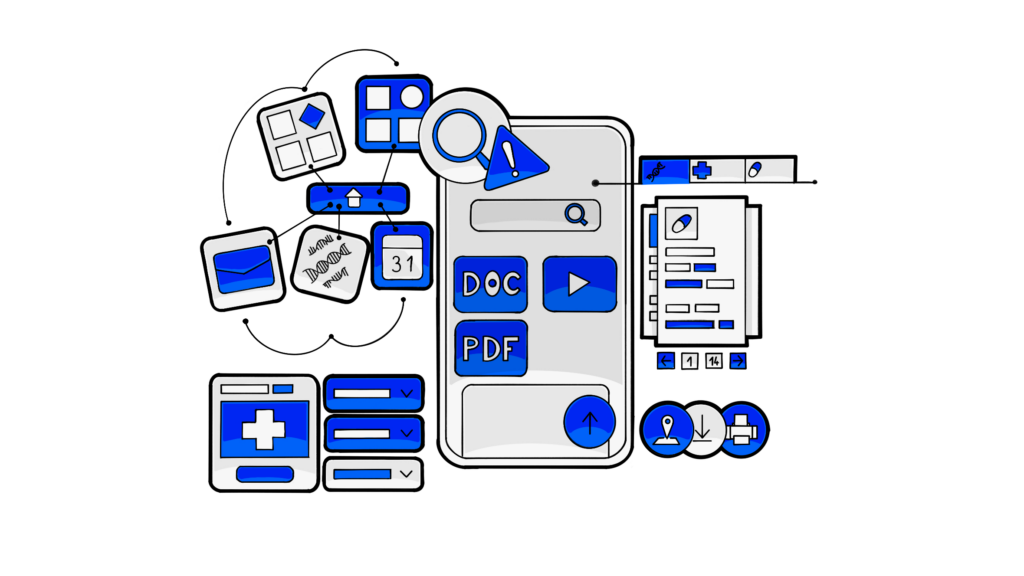
The same information can be valuable or frustrating depending on how it is presented. A detailed PDF may work well for deeper review, but not when an HCP needs a quick answer. A short video may be effective for a fast overview, but not enough when someone is looking for supporting evidence. Format does not replace content quality, but it strongly affects usability.
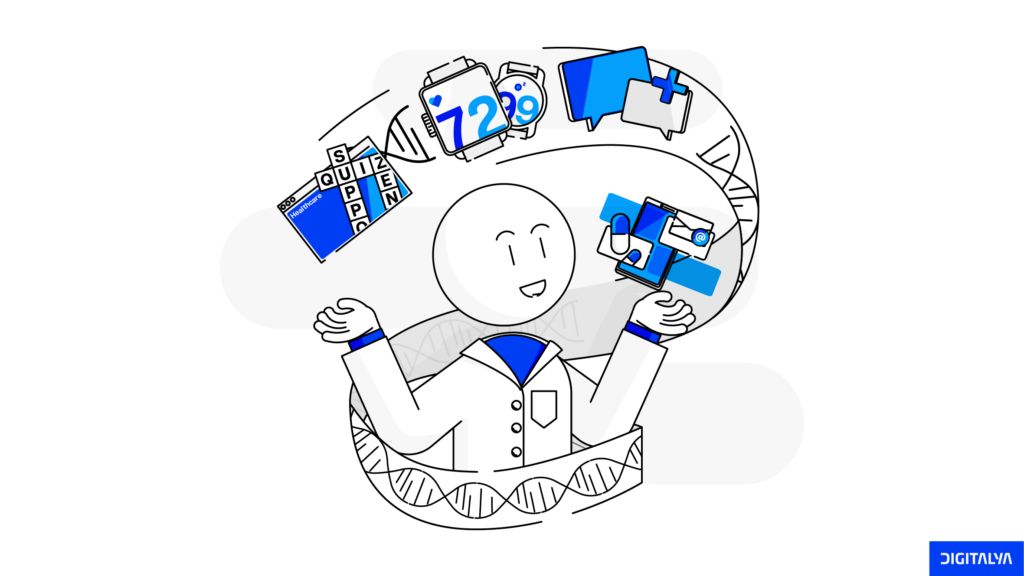
In personalized HCP journeys, media formats matter because different moments call for different types of interaction. A more flexible content experience can include:
- Articles and summaries for structured reading
- Videos and animations for quick explanation
- Interactive tools for practical use
- Infographics and visual assets for fast scanning
- Downloadable resources for deeper reference
Stronger HCP portals usually make format part of the experience design. They give users different ways to engage with the same information depending on time, need, and preference.
When format choices are aligned with user intent, personalized journeys become easier to continue and more useful to revisit.
How to structure content for better HCP portal journeys
If content is difficult to organize behind the scenes, it becomes much harder to keep it relevant on the front end. Personalization depends on having content that can be grouped, tagged, updated, recommended, and reused in a consistent way.
In HCP portals, a stronger content structure often includes:
- Clear content types, such as articles, evidence summaries, videos, tools, and educational modules
- Consistent tagging, based on specialty, topic, indication, format, and stage of engagement
- Modular content blocks, so teams can reuse and update content more easily
- Logical pathways, which help HCPs move from quick answers to deeper learning
- Governance rules, so content stays current, consistent, and easier to maintain
If everything is stored as isolated assets with little structure, it becomes much harder to recommend the right resource, surface useful next steps, or maintain consistency across the portal.
A better structure also improves discoverability. HCPs should not have to guess where information lives or how different resources connect. The experience should make it easier to move naturally between formats, depth levels, and related topics.
That is what turns content from a static library into a more flexible journey system. Instead of simply storing materials, the portal can support exploration, learning, and relevance at scale.
Conclusion: personalization works when relevance is built into the experience
Personalized HCP journeys should not be treated as a thin layer on top of disconnected assets. They need to be supported by a strong content foundation, clear structure, and an experience designed around how HCPs actually engage.
When relevance is built into the content experience from the start, personalization becomes more than a tactic. It becomes part of what makes the portal genuinely valuable.
Personalized HCP journeys are experiences designed around what different healthcare professionals need, when they need it, and how they prefer to engage. In HCP portals, this means making content, recommendations, and next steps more relevant to the user’s context, role, and intent.
Omnichannel engagement focuses on connecting channels and touchpoints, such as email, portals, webinars, and rep interactions. Personalized HCP journeys go further by making those interactions more relevant to the individual HCP. In other words, omnichannel connects the experience, while personalization makes it more useful.
Many journeys fall short because personalization is often treated as a delivery or orchestration layer, while the underlying content remains too broad, outdated, hard to find, or poorly matched to real HCP needs. When the content experience is weak, the journey still feels generic.
Content structure matters because it makes personalization easier to support at scale. When content is clearly organized, tagged consistently, and built in reusable formats, portals can surface more relevant resources, improve discoverability, and keep information easier to maintain over time.
Content quality affects whether an HCP finds the experience useful, while content currency affects whether they trust it. Even well-designed journeys lose value if the content is unclear, too generic, or no longer up to date.
Different formats support different moments of need. A quick summary, a video, an interactive tool, and a downloadable resource may all serve the same topic in different ways. Choosing the right format helps make content easier to use and more relevant in context.